Blue: one writer-producer, a few guests, and credits that differ by source
Blue sounds like a solo record, and mostly it is. But a handful of tracks carry other players, and the sources we checked do not list them in exactly the same way.
By SongTrace · Published 11 November 2026 · 4 min read
The record
Blue is the fourth studio album by the Canadian singer-songwriter Joni Mitchell, released by Reprise Records on 22 June 1971. According to Wikipedia, she wrote and produced it entirely herself, and recorded it at A&M Studios in Hollywood, in Studio C. The article says recording was completed in March 1971; it gives the start as late 1970 in the text and as January 1971 in the infobox, so the exact dates are not consistent even within one page.
Wikipedia adds that Carole King was recording Tapestry in the same building, and that Mitchell sang backing vocals on King’s album. An early track list sent to Reprise opened with “Carey” and closed with “River”, and included “Hunter” and “Urge for Going”. Mitchell had the pressing halted and replaced those two with “All I Want” and “The Last Time I Saw Richard”.
Who played what
The personnel list on Wikipedia is short. Track numbers below follow the original running order (1 “All I Want” to 10 “The Last Time I Saw Richard”):
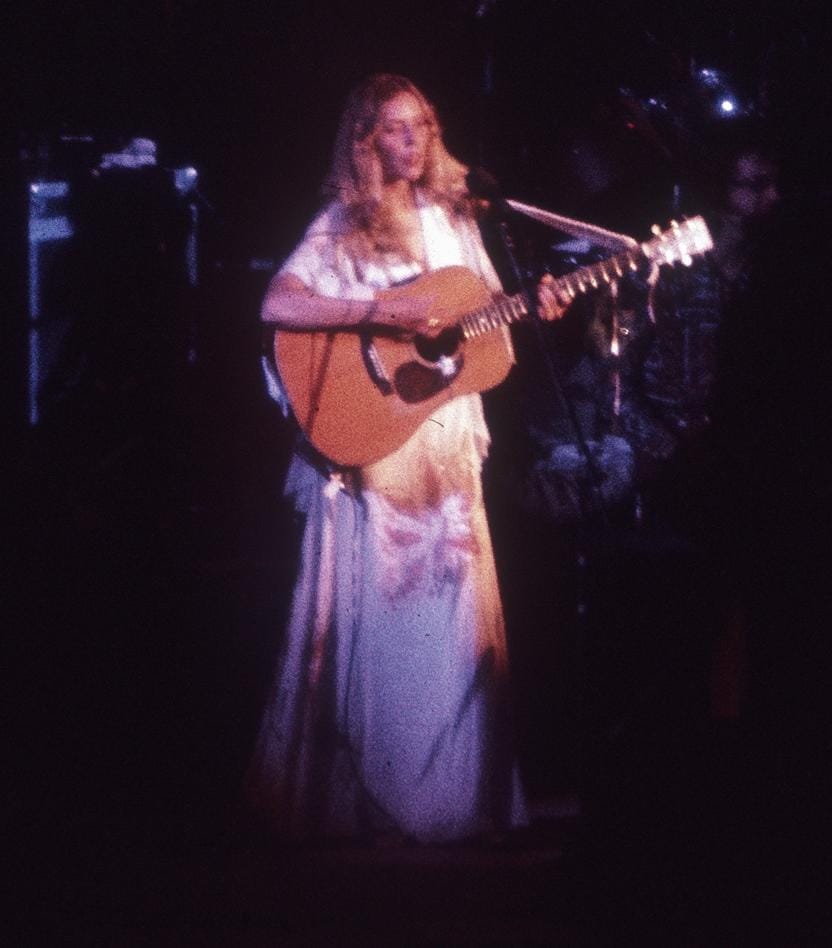
- Joni Mitchell: vocals, acoustic guitar, Appalachian dulcimer and piano. She is also the credited producer.
- Stephen Stills: bass and guitar on track 4, “Carey”.
- Sneaky Pete (Pete Kleinow): pedal steel guitar on tracks 6 and 7, “California” and “This Flight Tonight”.
- Russ Kunkel: drums on tracks 4, 6 and 9: “Carey”, “California” and “A Case of You”.
- Henry Lewy: engineer.
Gary Burden is credited with art direction and Tim Considine with the cover photograph. Wikipedia’s article quotes Joel Bernstein saying the photo was taken at the Troubadour in 1967 or 1968, years before the album.
Where the sources disagree
James Taylor is missing from the Wikipedia personnel list, yet the article’s own text says he played acoustic guitar on “All I Want”, “California” and “A Case of You”. MusicBrainz credits him with guitar on exactly those three recordings, and also lists Mitchell on Appalachian dulcimer on several tracks, Stills on bass and guitar on “Carey”, Kunkel on drums and Kleinow on pedal steel, in line with Wikipedia’s list.
On “Little Green”, MusicBrainz lists only Mitchell, on acoustic guitar and vocals. Note also that the Wikipedia text describes Kunkel’s contribution to “All I Want” and “Carey” as percussion, while its personnel list gives drums for other tracks. We cannot settle that from these sources alone, so it is worth treating per-track instrument credits for this album as approximate.
What this teaches about reading credits
- A single name on the cover can hide a few guests. Look at the track-level credits, not only the album headline.
- Two credit lists for the same record can differ: here a guitarist named in the text is absent from the personnel list.
- Producer and songwriter can be the same person, which is why one name appears in several roles.
- Instrument names vary: percussion, congas and drums may all describe a similar part.
Look it up
Search a track from the album, such as A Case of You, and compare the credits you see with the list above. For related reading, see Rumours: who played on Fleetwood Mac’s 1977 album and Producer, engineer, arranger: what the credits mean.
Sources
The facts in this story were checked against the pages below (the Wikipedia pages are in English). Credits can differ between sources, so for anything important compare with the original release.