Sgt. Pepper: four Beatles, one producer and a long list of extras
The Beatles played most of Sgt. Pepper themselves, but not all of it. The details are in the extra musicians, the producer’s keyboards and an engineer the original sleeve did not name.
By SongTrace · Published 16 November 2026 · 4 min read
The record
Sgt. Pepper’s Lonely Hearts Club Band is the eighth studio album by the Beatles, released in the UK on 26 May 1967 on Parlophone. According to Wikipedia it was produced by George Martin, and MusicBrainz agrees on the date, the label and the producer.
Wikipedia says the sessions began on 24 November 1966 in Studio Two at EMI Studios, later Abbey Road Studios, with “Strawberry Fields Forever” and “Penny Lane”, which were released as a single and left off the album. The album’s infobox gives its recording dates as 6 December 1966 to 21 April 1967, and lists EMI and Regent Sound in London. The same page says nearly every track was recorded in Studio Two.

Who played what
The personnel list on Wikipedia draws on the books by Mark Lewisohn and Ian MacDonald. The four Beatles cover a lot of ground:
- John Lennon: lead, harmony and background vocals, rhythm, acoustic and lead guitars, Hammond organ, harmonica and tape loops, plus bass on “Fixing a Hole”.
- Paul McCartney: vocals, bass and lead guitars, piano and organs.
- George Harrison: vocals, guitars, sitar, tambura and swarmandal, and lead vocal on “Within You Without You”.
- Ringo Starr: drums, congas, tambourine, maracas and tubular bells, with lead vocals on “With a Little Help from My Friends”.
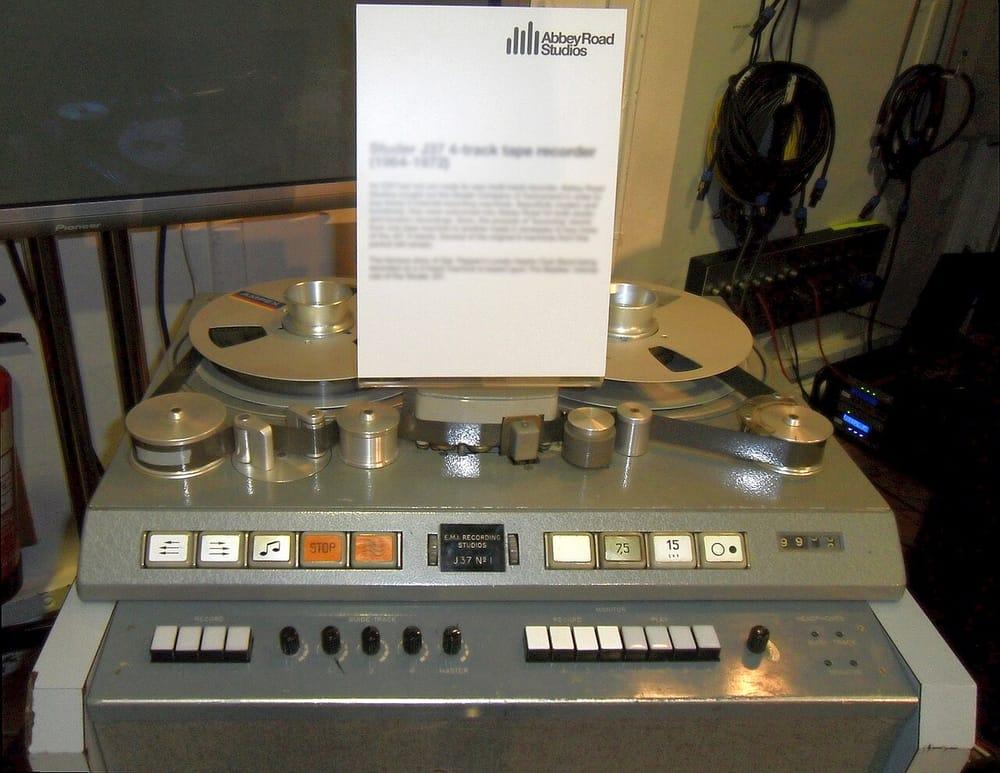
The list goes on beyond the band. George Martin is credited as producer and mixer and also plays harpsichord, harmonium, glockenspiel, Mellotron and piano on different tracks. Neil Aspinall and Mal Evans, the Beatles’ road managers, add harmonica, tambura, counting and an alarm clock. Geoff Emerick is listed as engineer.
What changes from track to track
Some tracks are the band alone; others are not. The title track has four French horns, credited to Neill Sanders, James W. Buck, John Burden and Tony Randall, and both Wikipedia and MusicBrainz name them. “She’s Leaving Home” has a harp played by Sheila Bromberg and a string section arranged by Mike Leander and conducted by Martin. “When I’m Sixty-Four” has a clarinet trio, and “Good Morning Good Morning” has horns from Sounds Inc.
“Within You Without You” is the clearest case. Wikipedia says Harrison recorded it with London-based Indian musicians and that none of the other Beatles played on it; a string section was added in a Western arrangement. “A Day in the Life” uses a forty-piece orchestra, and its last piano chord was made by Lennon, Starr, McCartney and Evans playing an E major chord on three pianos at once, with a harmonium from Martin.
What this teaches about reading credits
- A band album can still have guests. Here the extras are strings, horns, clarinets and Indian instruments.
- A producer can be a player. Martin is credited on keyboards as well as production.
- The sleeve is not the whole record. Wikipedia notes that EMI refused Martin’s request to credit Emerick as engineer, yet Emerick won the 1968 Grammy for Best Engineered Album, Non-Classical. MusicBrainz lists him as engineer on most tracks.
- Sources can disagree. Wikipedia names Natwar Soni on tabla for “Within You Without You”, while MusicBrainz lists Amiya Dasgupta, and a few names are spelled differently between the two. Treat uncertain names with care.
Look it up
Search a song from the album, such as A Day in the Life, and compare what is listed with the lists above. For another record with a large outside cast, read Pet Sounds: who really played on the Beach Boys’ album and Producer, engineer, arranger: what the credits mean.
Sources
The facts in this story were checked against the pages below (the Wikipedia pages are in English). Credits can differ between sources, so for anything important compare with the original release.
Share this story
Keep reading
 Photo: Alvis Jean · CC BY-SA 4.0Abbey Road: four Beatles, a guest organist and a Moog4 min read
 Photo: Howard Thompson · CC BY-SA 2.0Pet Sounds: the Beach Boys’ album, played by the Wrecking Crew5 min read
 Photo: Ksks2424 · CC BY-SA 4.0Producer, engineer, arranger: what the credits really mean5 min read